-
So, About That DaVinci Thing…
Posted on May 16th, 2010 4 commentsDue to my work schedule, I did not attend the NAB convention in Las Vegas this year. Which, as it turns out, is a pity, because it was probably one of the most interesting gatherings in quite some time. Lots of interesting announcements on various fronts, involving some of the more significant players in our business, including Arri (with the Alexa camera line), Aaton (showing the proposed digital back for the Penelope camera), Assimilate (showing a new version of Assimilate Scratch working with Arri RAW files in real time), Filmlight (some very interesting new things coming, including integrated Red Rocket support, and support for Sony’s new software version of the SR codec, allowing for some very efficient file based workflow enhancements), and Avid (Media Composer 5, one of the most significant upgrades of that software in years). And I’ll be writing about all of these things in time. But perhaps the most significant – and potentially disruptive – announcements came from Blackmagic Design regarding their newly acquired DaVinci product line. Read the rest of this entry »
-
I’m Back
Posted on May 16th, 2010 No comments I’ve been a bit busy lately, both personally and professionally, which has resulted in a bit of time between posts. Personally, I moved (from Woodland Hills, in the San Fernando Valley, to Playa Vista, near Marina Del Rey) about 3 weeks ago. This represents a kind of homecoming for me, only a year after coming home from a few years in Florida, as I lived in the Marina on and off for almost 10 years. I’ve always loved living near the beach, especially here in Los Angeles during the summer months, as during the day, it’s almost always at least 20-30 degrees cooler than it is in the Valley (yes, you read that right: it can be 105 degrees in the Valley, while at the beach – less than 10 miles away if you’re in Woodland Hills – it’s only in the mid 70’s). Professionally, I’m now working for a digital intermediate and post facility called Next Element by Deluxe, in Burbank. Next Element has been a working digital intermediate facility for the last 7 years (it was previously known as Hollywood Intermediate), and was recently acquired by Deluxe Digital Media. The company has expanded its focus into television post production, and that’s in part where I come in. My actual title is Senior Colorist (along with Julius Friede, whom I’ve known for many years), although as with most smaller facilities, I’ll also be involved in helping to solve some workflow and technical issues along the way. The people at Next Element are top notch, from the management team, to the producers, to the technical staff, and I’m very happy to be with them. It also represents a reunion of sorts for me with an old friend, Bruce Long, who’s come in as President of Next Element, and is someone I’ve known for almost 20 years and worked with previously during my time at Encore Video. He’s also a very close friend, and the opportunity to work together again is something I’ve looked forward to for a long time. In addition, Next Element is one of the first of what I would consider a “new age” post facility, one that is almost entirely file based, with no use of videotape other than for ingest and delivery. The combination of a custom built Linux based infrastructure, Baselight color grading systems, and some very, very smart people makes for a rather unique atmosphere. I think (and hope) the industry will be hearing quite a bit about us in the near future.
That’s enough about me. We now return you to our regularly scheduled blog posts, already in progress….
-
Got RAW If You Want It
Posted on April 11th, 2010 3 comments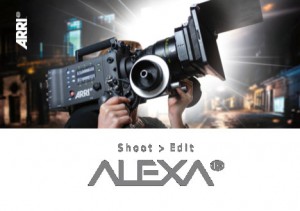 With the NAB convention taking place in Las Vegas this week, there are going to be quite a few announcements about all kinds of products. This being NAB, it should always be remembered that an announcement does not a product make, and most certainly, an announcement does not a ship date make. Product announcements are, first and foremost, tools to keep current customers interested and engaged, and potential customers intrigued. I’ll have a lot more to say about NAB announcements after I visit Las Vegas later this week, but one very significant announcement did not wait for NAB. The introduction of the Arri Alexa digital camera line took place in Los Angeles last week, in part to allow the many industry people who are working on television pilots at the moment to participate (why NAB always takes place smack in the middle of pilot season is something I’ve never understood), and probably in part to get some direct attention prior to the rather mad, free for all atmosphere that NAB represents. At any rate, the event was very well attended and very well presented, and illustrated the clear differences between Arri – a well established, well regarded and well known industry player for many years – and their primary competitor in the digital cinema camera arena at the moment, which would be Red – a company with a much shorter history, but a lot of interest, a lot of buzz, a very significant product line, and some big sales numbers. Read the rest of this entry »
 -
Greetings from Mumbai
Posted on March 11th, 2010 3 commentsThis week I’m in Mumbai, India, doing some demos for my friends at Assimilate (makers of Assimilate Scratch, a digital intermediate system – among other things – that I’ve used for a few years now, both in Miami and back home in Los Angeles). This is my first visit to this part of the world, and that being the case, I’m still a bit overwhelmed, even after 4 days here. What I do know is that I’ve met a lot of interesting, talented, and for lack of a better term, wonderful people that I’m very happy to call new friends. I’ve seen a lot and learned a lot, as is usually the case when one travels to places with cultures and living circumstances very different from their own. Read the rest of this entry »
-
SAG and AFTRA: Together Again
Posted on February 28th, 2010 1 commentLate this past week, announcements were made by SAG and AFTRA that stated their intention to negotiate jointly for their next Film and Primetime Television deal. These negotiations are slated to begin this fall, although the current contracts – signed by AFTRA in 2008 and SAG many months later, in 2009 – don’t expire until June of 2011. These early negotiations were part of the settlement agreed to by SAG when they finally accepted the current contract. The announcement was not unexpected, especially given the upheaval SAG has gone through in the last 2 years, and the stated intentions of their new leadership under their new President, Ken Howard. But make no mistake. SAG is fighting to maintain relevancy, particularly in television, where their antics of the last year and a half have severely reduced their ability to maintain their representation. Read the rest of this entry »
-
New Design
Posted on February 14th, 2010 3 commentsWelcome to The New Postworld.
Postworld is created using the WordPress platform. WordPress allows the use of Themes to quickly design and modify the appearance of an individual site. Postworld is now using a theme designed by SRS Solutions called Arjuna. I’ve only slightly modified it for my use here. Since Postworld is primarily a blog, and primarily text based, I felt this particular theme allows it to be read a bit easier than the previous design. At any rate, I hope you enjoy the new look and find it a bit easier to get around.
-
Another Red Day
Posted on February 14th, 2010 No commentsYesterday, I attended the Red Day presentation done at Ren-Mar Studios (oops…. I meant Red Studios Hollywood – old habits die hard in this town..). Saw a lot of familiar faces, and met a lot of new ones. I especially enjoyed seeing Assimilate’s use of dual Red Rocket cards to provide live playout of stereoscopic Red material with full debayering in real time. That alone has a lot of potential that I hope to explore.
This morning, a discussion on the CML centered around things Red (and possibly other companies) might be able to do that would be truly revolutionary and useful. It seems to many that most of the talk involving new digital cameras centers around things like improved dynamic range and resolution – important things to be sure, but ones that are really incremental improvements, not revolutionary changes. To be revolutionary, something has to be presented that accomplishes something that cannot currently be accomplished, or at least accomplishes it in a new way that changes the way one looks at the problem. It is very helpful if that change is also useful, in terms of either making a task more efficient, or eliminating costs associated with doing things using the current methods. I’ve got some things to suggest that I think might be revolutionary and useful. All relate to characteristics of the current Red systems that are often criticized, such as its use of a proprietary file and compression format, the need to supply personnel and systems for backing up files at the time of production, the complications involved in maintaining a consistent color path for dailies, the need to constantly transcode camera files, and the lack of a proper archival element. Here are some of them:
-
iPad – Give it Time
Posted on January 29th, 2010 1 comment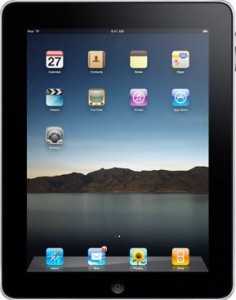
Apple iPad
Apple has always been one of the most interesting of technology companies, especially when it comes to new product introductions. They have proven themselves to be so innovative and original that when they don’t hit stratospheric heights right out of the box, it’s a major disappointment. They have also been so responsive to vastly different market segments (consumers, high end professional media folks, and everyone in between) that it’s sometimes difficult to see them as they actually are – which, to me, is a very successful consumer electronics company that also does some products for specialized market segments. And it is from that perspective that I look at their latest product, the iPad.
The iPad is not a desktop computer. And it is not a laptop, which in itself has become a physically smaller and more portable version of a desktop computer. It is, for lack of a better description, primarily an Internet portal, plain and simple. Connectivity is its primary purpose in life. And that connectivity is provided in a physically small package with a not so physically small screen. Since there is no keyboard or pointing device (it uses a virtual keyboard, like the iPhone, but it can attach to an external keyboard as well), it is a single piece that does essentially all of its user interaction via a touch screen. For many, it seems that the iPad is nothing more than a much bigger iPod Touch. And to some degree, this is true. It even uses the same operating system and runs the same applications. But to judge what the iPad is by its first incarnation is to overlook the history of Apple as a company, and how it both introduces and evolves its products.
-
2010: Fearless Forecast
Posted on January 2nd, 2010 3 commentsThis is the time when you see a lot of reviews of what’s transpired over the last year, but I’m not going to do that. For one thing, 2009 really sucked on almost every level, so why rehash it? But more importantly, I like to look to the future and not dwell on the past. And the future will be, at the very least, well, interesting. And not necessarily in the ways you might expect. So here are some personal prognostications for your profound perusal. And please don’t hold me to any of them – they’re all based on personal opinion with no basis whatsoever in actual fact. That said…
-
Scarlet Rays
Posted on December 4th, 2009 1 comment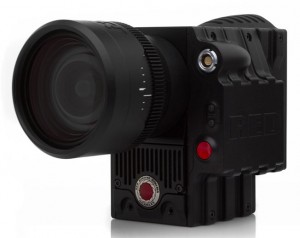
Scarlet 2/3" Fixed Lens
Earlier this week, Red Digital Cinema released information regarding some future products, in particular their Scarlet camera and Red Ray media player. I wanted to take a few days to go over the details and hear others reactions before posting mine.
Scarlet is an attempt to enter a new market segment for Red, who basically defined their own market with their first product, the Red One. The price/performance of that product was something that really hadn’t been seen before and a lot of people in the mainstream production industry really didn’t know what to make of it. But in the approximately 2 years since its release, it has established itself as a strong player in some very specific areas. Independent filmmakers (now redefined not as those who are working for independent studios, but as those who are working for themselves) latched on to the Red One as a device that could give them images that went considerably beyond what was available with “prosumer” video cameras, such as the Panasonic HVX200, which had become quite popular for this type of use. Some more experienced cameramen saw it as something they could afford to own and present themselves as owner/operators on a wide variety of productions, but particularly in music videos and commercials. In fact, in that two year period, the Red One has found pretty wide acceptance in that community. In what I would refer to as the “mainstream” industry, it has been used on a few sizable feature films, as well as a few television series, but it has seen much more success in the commercial world. The Scarlet represents an attempt to move, for lack of a better term, downmarket with a product that is smaller, simpler, and has a much lower price point. Surprisingly, Red plans to endow the Scarlet with a great deal of the functionality and image quality of the Red One and its successor, the Epic, and the ability to share a lot of peripherals with the Epic line, allowing both to be used together in a lot of situations. Like much of what Red has done so far, this is an approach that has never really been tried by the “traditional” camera vendors, and clearly reflects Red’s out of the box thinking.
Postworld
post production in the file based age


Recent Comments